Cosmology for Creators
Reweaving Relationship
with the Web of Life
A New Form of Creative Development
for Storytellers of Stage and Screen
All artists know there is an element of our work we leave to mystery.
The moments where art and life align, where things happen that we couldn't have planned, where we are growing alongside our creations.
Kismet, synchronicity, experiences of being guided, all open the door to a deeper sensing of the source that creativity comes from: the interconnected web of life.
Imagination emerges in collaboration with wider forces, with the resonance of found family, the alchemy of our emotions, the longings of our ancestors, the dreaming of nature, and the intelligence of the cosmos as a living consciousness.
Actors, Directors, Writers, Producers, and multi-hyphenate creative kin:
You know your creativity is connected to a bigger story than what the industry can hold.

Underneath every story is a cosmology.
“Like Creation stories everywhere, cosmologies are a source of identity and orientation to the world. They tell us who we are. We are inevitably shaped by them no matter how distant they may be from our consciousness. One story leads to the generous embrace of the living world, the other to banishment.”
― Robin Wall Kimmerer, Braiding Sweetgrass
Cosmology is our worldview, the paradigm we live within, it shapes what matters to us and what has agency in our world. The beliefs, values, and ways of knowing that structure our experience of reality emerge from the implicit cosmology we inhabit.
In her essay on the Carrier Bag Theory of Fiction, Ursula Le Guin describes a movement from the “killing story" of heroic individualism and the violence it takes to maintain it to a “life story" focused on the forms of gathering and tending that nourish the relational web.
Neurobiologist Darcia Narvaez and indigenous scholar Four Arrows describe a similar pattern in their research contrasting the Dominant Worldview of western supremacy focused on separation, competition, and exploitation with the Kinship Worldview of indigenous cultures focused on relationship, reciprocity, and regeneration.
Hollywood is a cultural mirror, but the reflection it currently holds is mostly of either exclusion or negative portrayal as the cosmology we create within is gatekeeping the edges of our imaginations.
MENTAL
HEALTH
A USC Annenberg Inclusion Initiative analyzed the occurrence of mental health conditions across 300 films, statistically identifying erasure within storytelling with less than 2.1% of characters depicted with a mental health condition, a correlation between portrayals of violence and mental illness, a lack of support-seeking within narratives, a lack of intersectional portrayals, and a lack of stories of healing.
INTERSECTIONAL
IDENTITY
According to the UCLA Hollywood Diversity Report and Bamman’s study measuring diversity in Hollywood, both in front of and behind the camera, white men are still disproportionately represented in leadership across acting, directing, writing, and producing. Borum documents how negative portrayals or absencing of diversity lead to cultural stigmas, citing 25 years of research that proves that what we see in media can shape “what we believe and feel in real life.”
CLIMATE
AWARENESS
The Climate Reality Check showed that representation of climate change was present in less than 10% of a sample of 250 popular fictional films. Their analysis also identified that intersectionality is not accurately represented within climate change, and only 2% of films contain a character who's experiencing climate anxiety, implying that climate and mental health are not accurately represented either. There is also a default to negative portrayals about climate awareness, similar to Borum’s description of negative portrayals of diverse communities and Pieper et al’s descriptions of negative portrayals of mental health conditions.
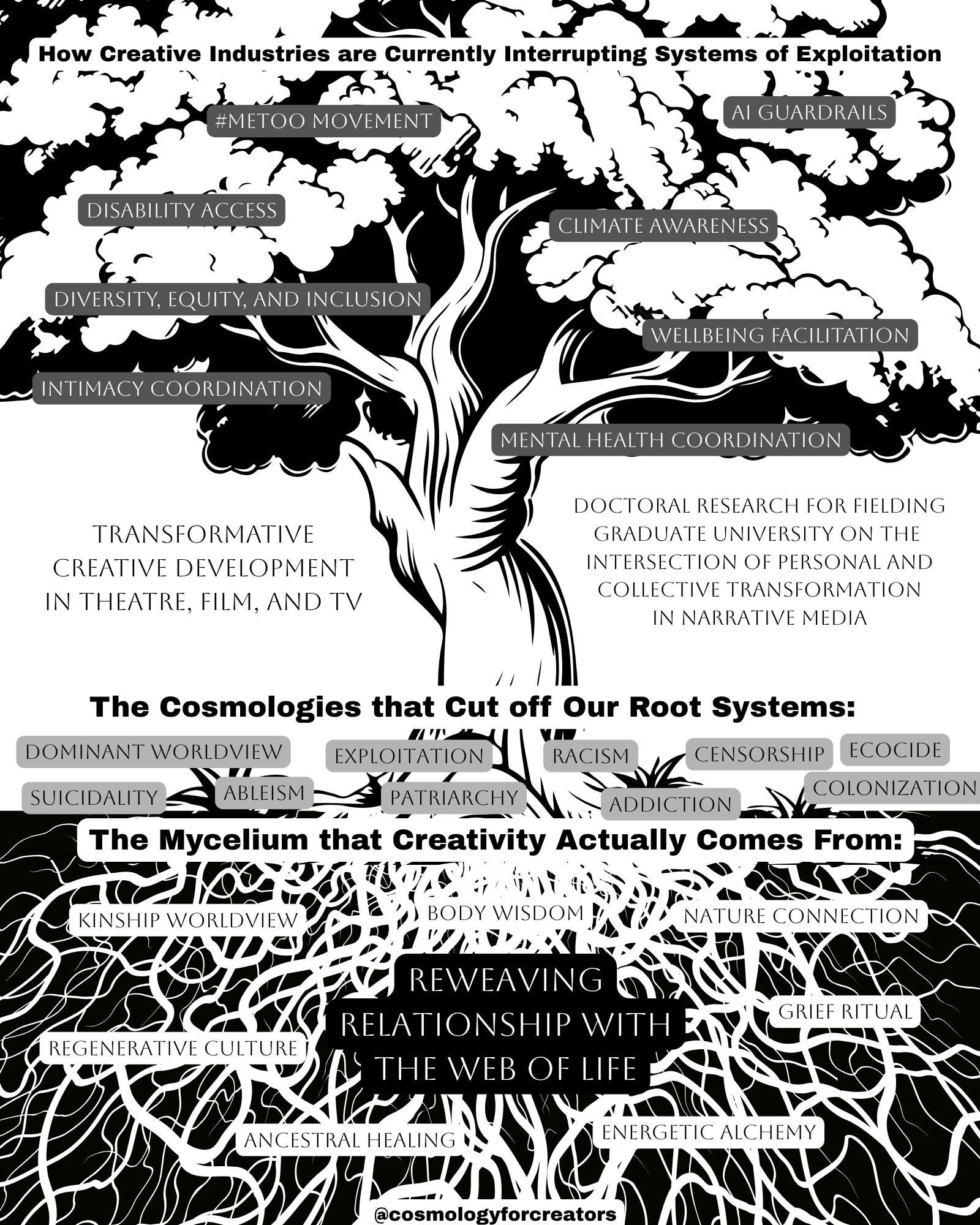
Creative industries are already in the process of a paradigm shift:
Intimacy Coordinators emerging from the #metoo movement bring in awareness of consent and power dynamics into on-set culture.
Wellbeing Facilitators and Mental Health Coordinators tend relational culture and nervous systems during challenging portrayals.
Cultural Strategists advocate for nuanced portrayals of diverse communities.
Climate Awareness Story Consultants advise on narratives around ecological impact.
The responses already exist, what’s missing is the conversation between them and how they fit within a wider movement towards regenerative cosmology.
The ancient meaning of cosmology comes from Greek and pagan cultures and is much more encompassing than a cognitive worldview or way of describing astronomical phenomena. The original meaning includes both earth and universe in an interconnected pattern of order, beauty, and harmony as an ongoing process of creation.
Alexander von Humboldt, a pathbreaking neurodivergent, queer, abolitionist naturalist who was massively popular in the 18th century, first used the word Cosmos in a modern sense to describe:
“One great whole animated by the breath of life.”
What gets excluded within creative process when there’s not a cosmology that can hold the wider context?
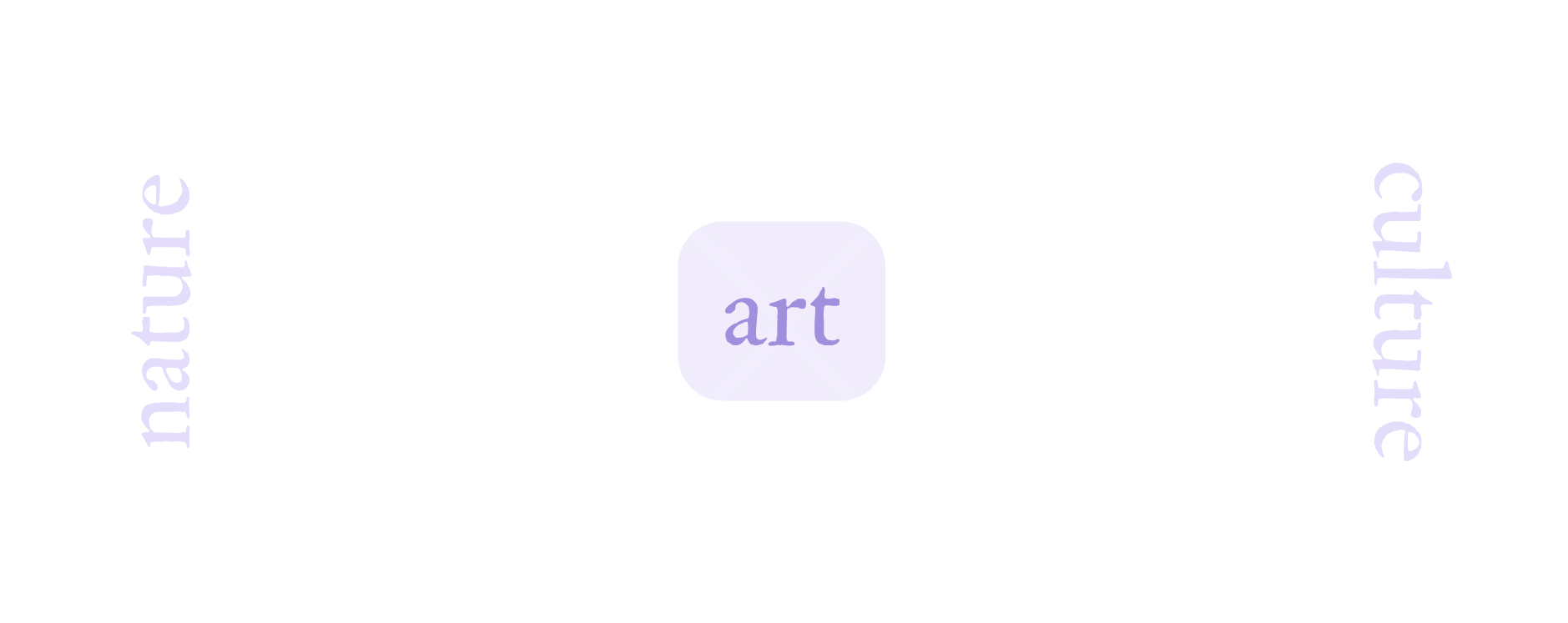
Cosmology for Creators draws on three relational feedback loops of creative process that are often excluded from awareness within industry environments during Creative Development:
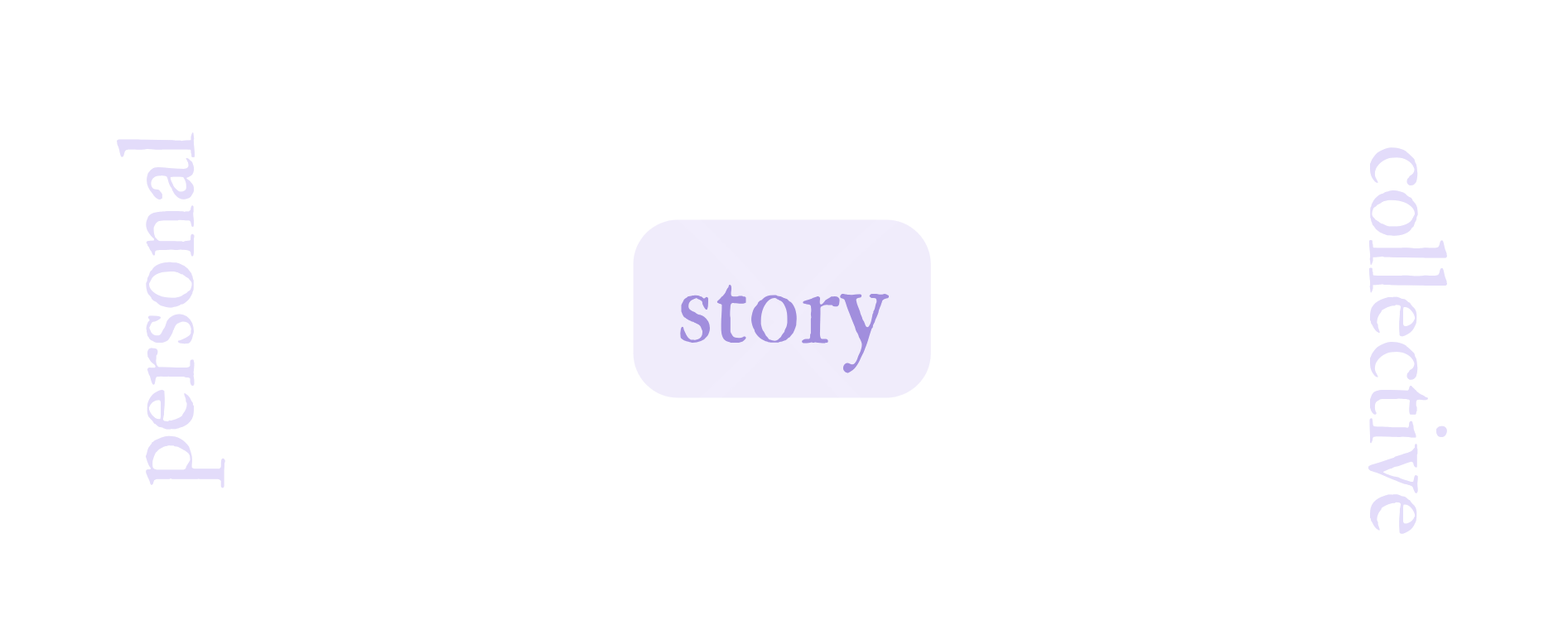
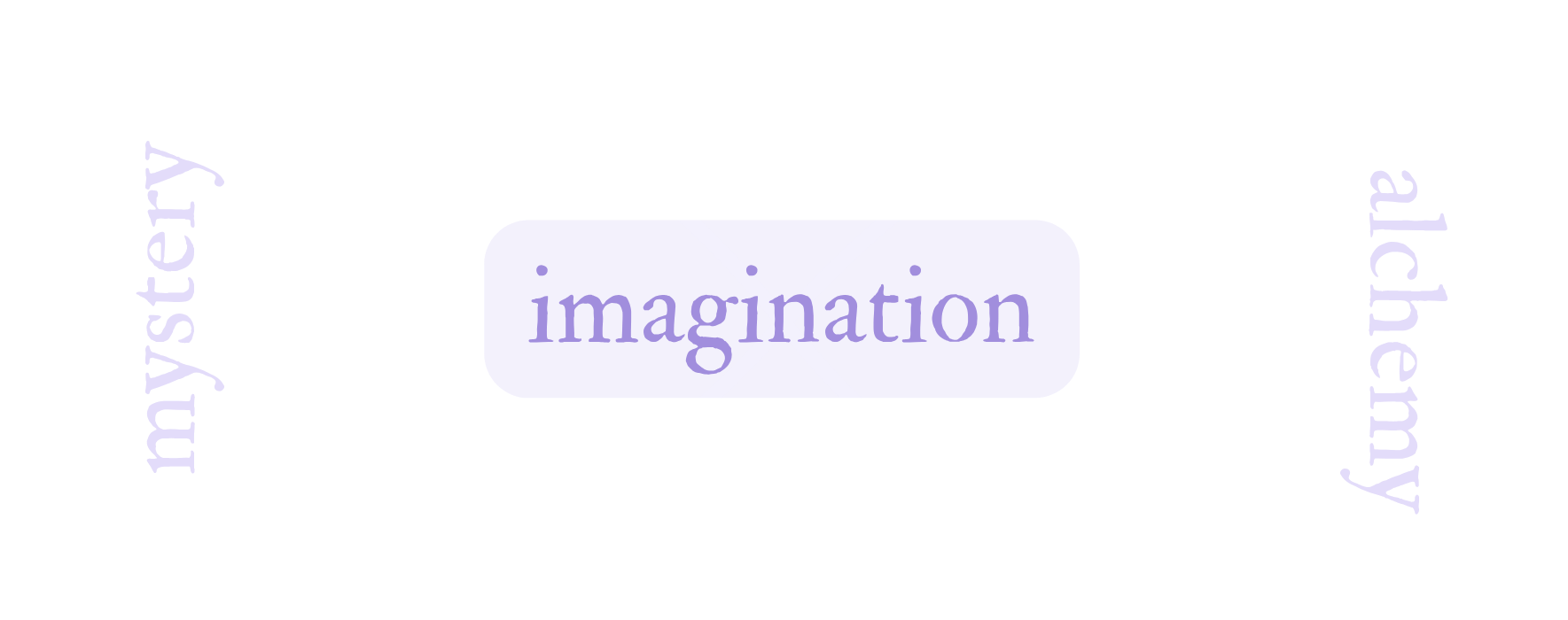
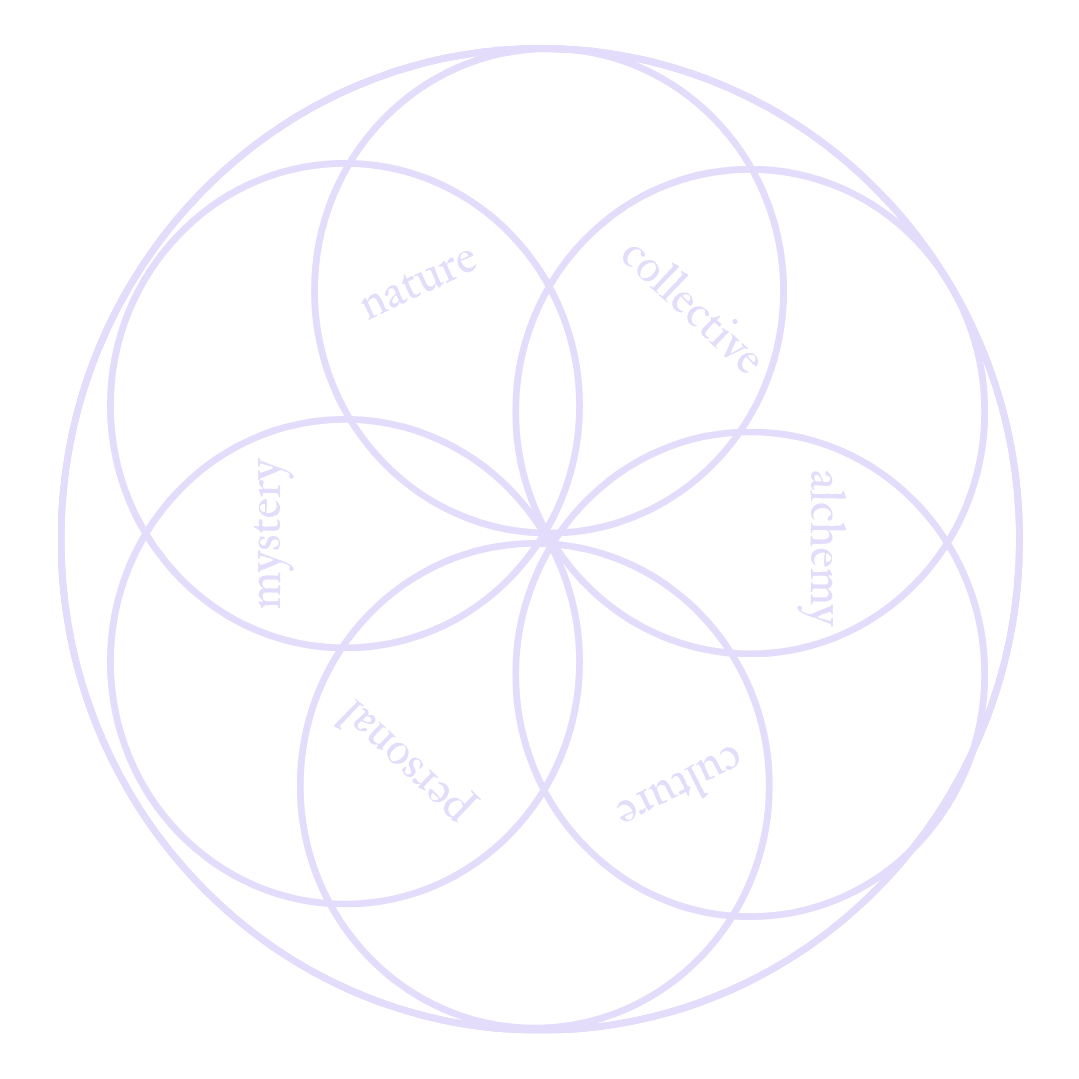
The intent of this work is illuminating the interconnections between all of the different places where creativity has become disconnected from cosmos, so that the regenerative feedback loops that nourish the web of life can be in flow, and the unseen layers of our creative vision can be welcomed within a context that allows their full potency to emerge.
Often artists can feel a connection to some of these wider contexts within their creative process, but there usually isn’t an industry narrative that can hold the full complexity, so we get cut off from the full potential for storytelling that honors relationship with this wider web.
Cosmology for Creators reweaves relationship to the wider pattern, so that artists can honor creative vision while integrating emotional wellbeing, intersectional identity, and ecological awareness within the artmaking process.
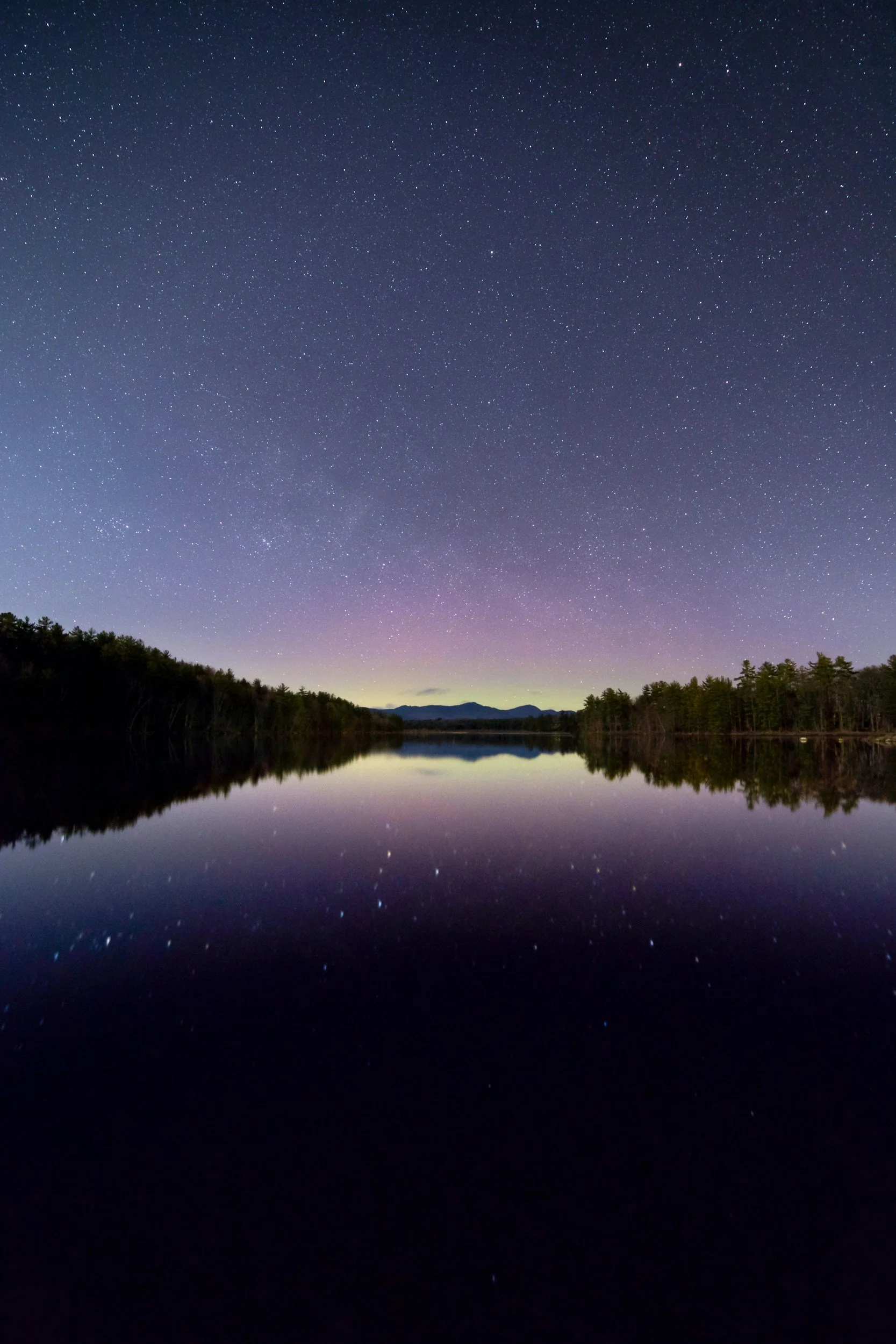
No star exists without a constellation.
Beyond individualist narratives of creative genius, characters whisper to Writers and surprise them with new material they did not plan. Actors experience blending with their characters and create intentional rituals to step in and out of roles. Directors dream of ancestors who influence the emotional alchemy of their creative process.
We can feel the way in which these unseen forces are influencing our storytelling and we try to hold integrity with them, but current approaches to Creative Development often stay focused on the project or the isolated artist without having a way to engage with the wider constellation that is shaping creative vision.
What we need is a context within which we can directly speak about Cosmology within Creative Development as part of an interconnected whole.
Systemic Constellations are a revolutionary new approach to Creative Development.
Systemic Constellations are an embodied practice of sensing the interconnected relationships we live inside of. They make the invisible patterns that shape a system visible and felt in real time, bringing awareness to the unseen forces shaping what it is possible to imagine, and opening up new possibilities for transformation.
The Constellations modality was created by Bert Hellinger, a German missionary who left the priesthood to become a therapist after his experience learning from the Zulu people of South Africa. Indigenous ancestral practices deeply shaped Hellinger’s form of constellation work as a way for Western people to engage with familial patterns across generations. Since Hellinger's foundational teachings in the 1980s, constellation practice has evolved significantly beyond work with family systems, into a growing international community of practitioners working across organizational, ecological, and collective contexts. Constellations have rarely been applied to creative work, and never yet to storytellers of stage and screen within a paradigm of transformative cosmology, which is what makes this process so exciting as a new methodology for creative development.

We come trailing ancestors and ecosystems.
We are not isolated bodies.
In a Systemic Constellation, a group of people agree to represent different aspects of a system. That system might be a family, an organization, an ecosystem, or something more abstract like a story or a culture. The person holding the question—described as the client or seeker—is guided by the facilitator to ask individuals in the group if they are willing to represent specific elements. Representatives who agree then step into the field of the constellation and find their place in space in relationship with the wider whole.
The practice of systems embodiment is at the heart of constellation work through a phenomenon which facilitators call Representative Perception. As soon as someone steps into a representation in a constellations, their nervous system begins to receive information from the field. Their posture shifts. Their breathing changes. They may notice emotion, imagery, physical sensation, or an impulse to move.
This phenomenon is different than acting or improv where the performer is generating a character through creative imagination, which often includes a craft-based intentionality around shaping specific physicality and the cognitive stretching process of creating a character and an emotional tone.
In constellation work the representative doesn’t invent anything, systemic information simply arrives as an effortless knowing about relationships in the form of sensations and spatial information once they are standing within the field of the system.
The phenomenon that makes this effortless receiving possible is called The Knowing Field, first described by facilitator Berthold Uslamer as the informational field through which systemic intelligence moves and becomes accessible to human perception.
The experience of attuning to this invisible layer of perception as a representative may sound paranormal or esoteric, but from the perspective of most indigenous cultures and wisdom traditions across human history, it is an entirely ordinary form of relational perception that is clearly documented within discourses around animism, shamanism, and ritual consciousness.
These patterns also are also present in developing theories around the nervous system and quantum relational sciences. The concept of neuroception from polyvagal theory acknowledges our capacity for field perception: our nervous systems are continuously scanning and sensing the relational undercurrents of our environment beneath the level of conscious awareness.
We walk into a room after an argument and feel the residue of it in the air. We walk through an old growth forest and our nervous systems relax into the mycelial field-presence of the wider living system around us. Systemic sensing is this same capacity, applied with intentionality to the participating elements of a relational system.
What constellation work does is create a structured context through which field perception can be embodied collectively as a distributed sensing phenomenon, with multiple people embodying different aspects of the same system to surface what has been unseen within its implicit organizing structure.
Constellation work can also be practiced one-on-one with objects, paper, or drawing in place of people through the same systemic principles of perception.
Art is Alchemy
for the transformation of culture,
weaving us into intimacy with life.

a Creative Cosmology Consultant and
Systemic Constellations Facilitator
Hi, I’m Shante’ Zenith,
I support storytellers of stage and screen in connecting to the unseen sources of their creative cosmology to widen possibilities for relational imagination. As a Consultant, Coordinator, and Collaborator: I am catalyzing a new form of Creative Development through cosmology, constellations, somatics, animist ritual, and ancestral healing to bring artists into the systemic change conversations that are necessary for collective transformation. Currently in training with the Association of Mental Health Coordinators, I can also be hired by writers rooms, film and television sets, and theatre projects to support regenerative wellbeing culture and emotional integration throughout creative process. As a Phd Student in Human Development at Fielding Graduate University, I am also engaging in doctoral research around artists’ stories about mystery and transformation within their creative process.


